When displaced persons overwhelm water and sanitation facilities, fierce scrambles and conflicts erupt. This is a daily reality at Dzaleka Refugee Camp in Dowa District.
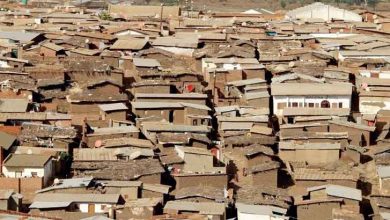
The former detention centre for political prisoners repurposed to accommodate about 10 000 refugees now shelters over 57 000 amid severe water, sanitation and hygiene (Wash) gaps.
Welthungerhilfe (A World without Hunger) has stepped in to fix the breakdown in Wash services with funding from the German Federal Foreign Office.

Project manager Dickson Baxter Phiri says the nine-country initiative seeks to mitigate humanitarian crises through Wash interventions, emergency response and rights advocacy.
Malawi’s €1.4 million focuses on improving Wash services at Dzaleka and transit centres in the Northern Region, supporting recovery from the Cyclone Freddy emergency and advocating for refugees’ rights.
The project has transformed the daily lives of thousands of the camp residents.
“For a long time, water access in the camp was limited and unpredictable,” Phiri says. “People queued for hours—sometimes before dawn—just to collect some water for the day.”
Welthungerhilfe has modernised boreholes, increased water storage capacity and expanded the distribution pipelines.
The upgrade also includes the construction of 18 water kiosks, with multiple taps, to reduce congestion and walking distances.
“These kiosks currently serve about 19 155 residents across the camp,” Phiri states.
Welthungerhilfe has installed eight 10 000-litre water tanks that supply 26 existing water kiosks to improve water distribution.
The old tanks, with half the capacity, were rusty and long past their lifespan.
Figures show the daily water available for a person has increased from 14.5 to 19 litres, easing pressure on families, especially women and children who fetch water.
The upgrade has increased the storage capacity to 60 000 litres, reducing scrambles and long waits during peak hours.
Recounts Toile Kabidu Nsimiret, a mother of five who fled war in the Eastern Democratic Republic of Congo: “Before the kiosks, we had a single borehole nearby. We were queuing for water and some people were using force to jump the line.
“I no longer wake up as early as 4am to beat the queue. The long lines and fistfights are history because the kiosks have many taps.”
The project has also increased latrines at Dzaleka.
Previously, the few toilets were overwhelmed and unsanitary, a minefield for preventable disease outbreaks.
Welthungerhilfe has constructed 11 communal latrines, including four friendly for the elderly and persons with disabilities. Two were designed to provide comfort and confidentiality to adolescent girls during menstruation.
Additionally, the project has constructed 59 blocks combining a toilet and a bathroom, for vulnerable families.
To expand access to sanitation and hygiene, the change agents also molded and distributed 450 dome slabs for better-off households to construct latrines.
Welthungerhilfe supported the safe desludging of filled latrines to prevent overflows, reduce air pollution and maintain hygiene standards.
Congolese refugee Faida Clemence says improved sanitation and hygiene is paying dividends for her family of eight.
“Before, we used to share a toilet with several neighbours. I am happy to have my own toilet complete with a bathroom,” she says.
Still, the family has to share the sanitation facility with a few unreached neighbours, including a family of 10–a call to more investment in Wash services for the displaced community amid population pressure, limited space and low funding
“While this project prioritised the most vulnerable households and promoted self-construction through dome slab distribution, coverage remains low,” Phiri concurs.
The project also included mass awareness campaigns and distribution of dignity kits for adolescent girls to break the silence and stigma associated with menstrual hygiene
The refugees hold monthly clean-up campaigns to maintain a safe and healthy environment for all.